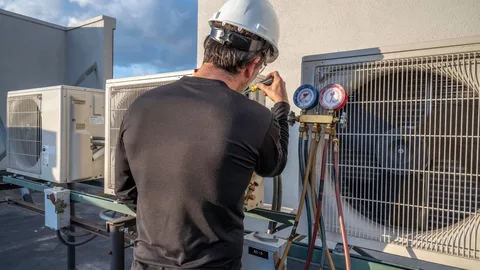
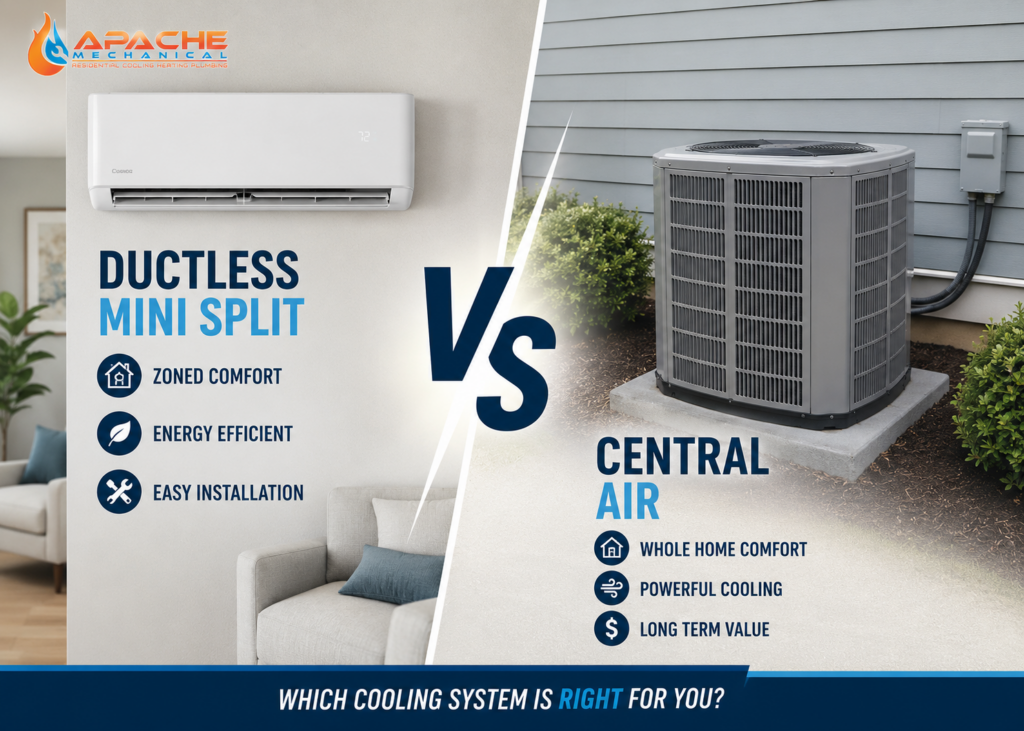
Choosing the right cooling system for your home is essential for comfort, energy savings, and long-term efficiency. Two of the most popular options are ductless mini splits and central air systems. Both have their advantages and limitations, and understanding these can help you make the best decision for your home. Apache Mechanical brings you a clear guide on ductless mini split vs central air.
What is a Ductless Mini Split System?
A ductless mini split system is an air conditioning solution that doesn’t require ductwork. It consists of two main parts: an outdoor compressor and one or more indoor air-handling units. These units are mounted on walls or ceilings and can independently cool or heat specific rooms.
Advantages of Ductless Mini Split Systems
- No Ductwork Needed
Perfect for older homes or spaces without existing ducts. Installation is simpler and less invasive than central air systems. - Energy Efficiency
Since air is delivered directly into rooms, energy loss is minimal compared to ducted systems where air can leak through ducts. - Zoned Comfort
You can control the temperature in each room individually, which helps reduce energy bills by cooling only the rooms you use. - Easy Installation
Most mini splits can be installed in a few hours by a professional, avoiding the need for major construction work. - Quiet Operation
Indoor units operate quietly, making them ideal for bedrooms or home offices.
Disadvantages of Ductless Mini Split Systems
- Higher Initial Cost
The upfront price for a mini split system can be higher than central air, especially for multiple rooms. - Aesthetics
Wall-mounted indoor units may not appeal to everyone’s interior design preferences. - Maintenance
Filters need regular cleaning, and professional maintenance is recommended every year or two. - Limited Heating Capability
While many mini splits include heat pumps, extreme cold climates may require a supplemental heating source.
What is a Central Air System?
A central air conditioning system uses a network of ducts to cool the entire home. The main components include a furnace or air handler, an outdoor compressor, and ductwork that distributes air to every room.
Advantages of Central Air Systems
- Whole-Home Cooling
Central air provides uniform temperature throughout your home, ideal for larger spaces. - Aesthetics
Most components are hidden in walls, ceilings, or basements, keeping your home free from visible indoor units. - Humidity Control
Central systems can better manage indoor humidity, improving comfort and reducing mold risk. - Higher Resale Value
Homes with central air are often more attractive to buyers, especially in regions where cooling is essential.
Disadvantages of Central Air Systems
- Energy Loss
Leaky ducts can reduce efficiency, sometimes by 20-30%, increasing energy costs. - Installation Complexity
Installing central air requires ducts, which can be expensive and disruptive, especially in older homes. - Less Zoning Flexibility
Central air cools the entire home at once, which may result in wasted energy if some rooms are rarely used. - Noise
Although usually quieter than window units, central air systems can generate noise through ducts and vents.
Ductless Mini Split vs Central Air: Head-to-Head Comparison
| Feature | Ductless Mini Split | Central Air |
|---|---|---|
| Installation | Quick, minimal construction | Complex, requires ductwork |
| Energy Efficiency | High (direct cooling) | Moderate (energy loss via ducts) |
| Cost | Higher per unit, lower for small areas | Higher overall for duct installation |
| Zoning | Excellent (room-by-room control) | Limited |
| Noise | Very low | Moderate (vent and compressor noise) |
| Aesthetics | Visible wall/ceiling units | Hidden ducts, sleek look |
| Maintenance | Filter cleaning, annual check | Duct cleaning, annual service |
Which System is Right for You?
- Choose a Ductless Mini Split if: You have a small home, apartment, or room without ducts, want energy savings, or desire room-by-room temperature control.
- Choose Central Air if: You want uniform cooling across a large home, value hidden components, or plan to increase your property’s resale value.
Tips for a Smart Installation
- Hire Professionals
Apache Mechanical recommends hiring licensed HVAC professionals to ensure correct sizing, placement, and efficiency. - Consider Your Climate
Mini splits are great for mild climates, while central air is ideal for larger homes in hot regions. - Think About Future Costs
Factor in maintenance, energy bills, and potential duct repairs before choosing a system. - Combine Systems if Needed
Some homeowners use a mini split for additions or hard-to-reach rooms while keeping central air in the rest of the home.
Conclusion
Choosing between a ductless mini split vs central air depends on your home size, budget, energy efficiency goals, and comfort needs. Both systems have clear advantages, and understanding the differences will help you make a confident choice. Apache Mechanical can help you assess your home and recommend the right solution to keep your family comfortable year-round.